Key Takeaways Fleet Carbon Reporting UK Regulations
• Mandatory Compliance: Large UK businesses are now legally required to report their fleet's carbon emissions under regulations like SECR (Streamlined Energy and Carbon Reporting).
• Data Accuracy is Vital: Estimations are no longer sufficient; companies must use precise telematics data to calculate their carbon footprint accurately.
• The 'Net Zero' Push: Government targets for 2050 are driving stricter reporting rules, putting pressure on fleets to not just report, but actively reduce emissions.
• Financial & Reputational Risks: Non-compliance can lead to fines, while a high carbon footprint can damage your reputation with eco-conscious clients and investors.
• Technology is the Solution: Advanced fleet tracking software automates the collection of emissions data, making compliance simpler and more accurate than manual spreadsheets.
Fleet carbon reporting UK regulations have shifted from voluntary guidelines to strict legal requirements for many businesses, compelling fleet operators to accurately measure, report, and reduce their greenhouse gas emissions. This regulatory framework, largely driven by the Streamlined Energy and Carbon Reporting (SECR) policy, aims to align corporate activity with the UK government's ambitious Net Zero 2050 target. For fleet managers, this means that tracking fuel usage and mileage is no longer just about cost control; it is a critical compliance activity. To navigate these complex environmental obligations efficiently, businesses are increasingly turning to automated data solutions, such as the carbon reporting tools within MoreFleet, to ensure they meet legal standards without drowning in administrative paperwork.

Understanding the Regulatory Landscape
The UK government has committed to one of the world's most ambitious climate targets: reducing greenhouse gas emissions by 100% relative to 1990 levels by 2050. To achieve this, legislation has filtered down to the corporate sector, placing the responsibility on businesses to be transparent about their environmental impact.
What is SECR?
The Streamlined Energy and Carbon Reporting (SECR) framework came into effect in April 2019. It replaced the Carbon Reduction Commitment (CRC) scheme and mandates that large UK companies must include energy and carbon reporting in their annual reports.
Your business likely falls under SECR scope if it meets two or more of the following criteria:
• Turnover of £36 million or more.
• Balance sheet total of £18 million or more.
• 250 employees or more.
If you qualify, you must report your global greenhouse gas (GHG) emissions and an intensity ratio (e.g., "tonnes of CO2e per £m sales"). For transport and logistics companies, the fleet is often the single largest contributor to these figures.
ESOS (Energy Savings Opportunity Scheme)
Alongside SECR, larger enterprises must also comply with ESOS. This is a mandatory energy assessment scheme that requires qualifying organisations to carry out energy audits every four years. These audits must identify cost-effective energy-saving measures, particularly within transport operations.
The Challenge of Accurate Data Collection
The biggest hurdle for fleet managers under these UK regulations is data accuracy. In the past, rough estimates based on fuel card receipts might have sufficed. Today, auditors and stakeholders demand precision.
Calculating emissions requires converting fuel usage into CO2 equivalent (CO2e). However, fuel receipts don't tell the whole story. They don't differentiate between business and private mileage effectively, nor do they account for how efficiently the vehicle was driven.
This is where emissions tracking technology becomes indispensable. Modern telematics systems connect directly to the vehicle's onboard computer (ECU). They record the exact amount of fuel injected into the engine and correlate it with distance travelled. This provides a granular, verifiable dataset that stands up to audit scrutiny, removing the guesswork from your annual reports.
Reducing Your Carbon Footprint
Reporting is only half the battle. The spirit of the legislation is not just to measure carbon, but to cut it. Businesses are expected to show a downward trend in their emissions year-on-year. Failing to show improvement can be just as damaging as failing to report, especially when tendering for contracts with sustainability-focused clients.
Strategies for Emissions Reduction
Once you have accurate data, you can identify the "low-hanging fruit" for reduction:
• Idling Reduction: An idling engine produces CO2 but goes nowhere. Telematics reports can highlight drivers who leave engines running unnecessarily, allowing for targeted coaching.
• Route Optimisation: Driving fewer miles naturally results in fewer emissions. Smart routing software ensures your drivers take the most direct path, avoiding traffic congestion where stop-start driving spikes pollution levels.
• Driver Behaviour: Aggressive driving harsh acceleration and braking can increase fuel consumption (and therefore emissions) by up to 15%. Scoring drivers on their smoothness encourages a more eco-friendly driving style.
• Electrification Transition: The ultimate reduction strategy is switching to Electric Vehicles (EVs). Fleet tracking data helps you identify which internal combustion engine (ICE) vehicles in your fleet could be feasibly replaced by EVs based on their daily mileage patterns and dwell times.
The Cost of Non-Compliance
Ignoring fleet carbon reporting UK regulations carries significant risks. The Conduct Committee of the Financial Reporting Council (FRC) monitors compliance with SECR.
Financial Penalties
While the primary mechanism for enforcement is currently "naming and shaming" via public reports, there is provision for fines for late or inaccurate filing. For ESOS, the penalties are more explicit, with fines reaching up to £50,000 for failure to undertake an energy audit, plus daily penalties for continued non-compliance.
Reputational Damage
Perhaps a greater risk than the fine itself is the reputational fallout. Corporate Social Responsibility (CSR) is a major factor for investors and consumers. A company that appears to be hiding its carbon footprint, or worse, increasing it, risks being labelled as a polluter. Conversely, a fleet that can demonstrate a proactive approach to sustainability compliance gains a competitive edge.
Automating Your Path to Net Zero
Manual spreadsheets are prone to human error and are incredibly time-consuming to maintain. As the complexity of reporting increases potentially including Scope 3 emissions (indirect emissions from your supply chain) in the future automation is the only viable path forward.
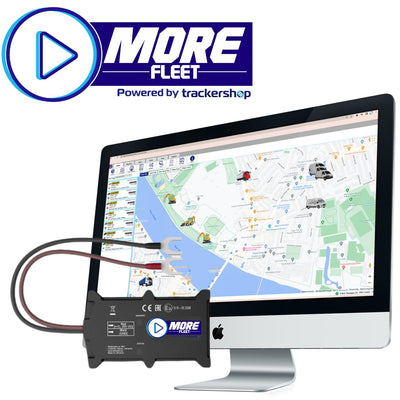
A robust fleet management platform acts as your compliance partner. It automatically aggregates data from every vehicle, applies the correct conversion factors, and generates ready-to-use reports for your directors. It transforms carbon reporting from a yearly panic into a manageable, monthly KPI.
Don't let regulatory pressure become a burden on your business operations. Embrace the certainty of automated data. Explore how the sustainability compliance features of MoreFleet can help you meet your legal obligations while driving efficiency across your entire fleet.